
The transition from a traditional W-2 employee to a self-employed business owner is one of the most rewarding yet challenging leaps a professional can make. Moving away from the predictable structure of a corporate hierarchy requires a fundamental shift in your psychological makeup. As an employee, your primary responsibility is execution, taking a predefined set of tasks and completing them within an established framework. When you step into the role of a founder, your responsibilities shift to absolute ownership, strategic vision, and continuous risk management.
Many aspiring entrepreneurs never launch their ventures because they believe in the skills gap myth, the mistaken idea that successful business owners are born with a rare, natural talent for commerce. In reality, entrepreneurship is simply an aggregate of learnable, tactical skills. Success does not depend on a single stroke of genius; it relies on your willingness to systematically master financial literacy, technical operations, regulatory compliance, and market positioning. This comprehensive guide provides a practical roadmap to help you acquire these essential capabilities, bridge the gap between employee and founder, and build a highly resilient enterprise from scratch.
Technical Mastery and Cross-Disciplinary Skill Acquisition

To successfully transition into self-employment, you must first establish a foundation of technical mastery. In the modern economic landscape, specialized service businesses and hands-on technical trades are exceptionally resilient against economic downturns and digital automation. Consumers and corporate clients will always need physical infrastructure maintained, custom products manufactured, and specialized services executed. True independence begins when you invest in yourself by acquiring highly technical skills that carry a substantial market premium.
For individuals looking to break into the booming commercial infrastructure or industrial repair markets, structured vocational education is the most effective way to build immediate credibility. Enrolling in professional welder training classes provides you with the rigorous certifications, safety protocols, and metallurgical knowledge needed to bid on high-paying structural contracts. By combining hands-on technical trades with advanced manufacturing technologies, you can easily command elite hourly rates that general laborers cannot match. For instance, pairing metal fabrication skills with a modern laser engraving service allows you to offer custom corporate signage, precision industrial marking, and personalized high-end consumer goods, establishing a diversified, high-margin revenue model right from launch.
- Commit to structural upskilling: Dedicate at least six to twelve months to formal technical training before resigning from your primary job, treating your education as an essential capital investment in your future brand.
- Master digital design software: Learn vector design programs and computer-aided manufacturing platforms to seamlessly translate raw client creative concepts into repeatable machine programming workflows.
- Build an interactive portfolio: Document your training milestones and early production pieces online, creating an irrefutable visual track record of your technical precision to show potential commercial clients.
Operational Logistics, Asset Management, and B2B Procurement
An entrepreneur cannot survive on technical talent alone; you must also become a master of supply chain management, asset scaling, and vendor negotiations. One of the quickest ways a new business goes bankrupt is through poor cash flow management caused by unoptimized procurement processes. To secure healthy profit margins, you must learn to source raw materials, navigate wholesale pricing tiers, and manage physical assets with the same precision as a seasoned corporate purchasing director.
If you choose to launch a venture within the automotive fleet servicing, industrial maintenance, or heavy machinery sectors, understanding commodity procurement is vital. Sourcing your fluids and lubricants directly from a bulk motor oil wholesale distributor rather than standard retail channels can instantly cut your operational costs by half, giving you a major competitive advantage. Managing these heavy materials requires specialized transport and asset logistics. If your business model involves large-scale physical handling, you must also master fleet coordination. For example, building out a commercial moving company demands deep knowledge of heavy vehicle procurement, commercial driver licensing, cargo insurance, and spatial packing logistics to ensure every customer asset is transitioned safely and profitably.
- Negotiate volume discount agreements: Never accept standard catalog pricing from commercial suppliers; instead, draft formal requests for proposals to force vendors to compete for your recurring wholesale business.
- Implement strict inventory controls: Use modern tracking software to balance your physical stock levels perfectly, avoiding tied-up cash in excess inventory while ensuring you never experience a stockout during a busy cycle.
- Optimize your equipment lifecycle strategy: Map out clear preventative maintenance schedules for every mechanical vehicle and tool in your inventory to delay costly capital expenditures and protect your resale values.
Strategic Niche Selection and Service-Based Modern Infrastructure

When choosing a business model, the most lucrative opportunities often lie in unglamorous, high-friction service industries rather than trendy lifestyle sectors. Essential infrastructure maintenance, regulatory compliance services, and environmental utilities are highly stable because they are driven by strict legal requirements and physical necessity rather than disposable consumer income. Gaining skills in these specialized, asset-heavy niches allows you to build a highly defensive business that remains profitable through any economic climate.
One of the most stable service niches involves mandatory environmental evaluations and real estate safety assessments. Learning how to execute a comprehensive septic inspection requires an intimate understanding of environmental soil science, local plumbing ordinances, and hydraulic mechanics. Because these evaluations are legally mandated during residential property transfers, mastering this process gives you direct access to a steady stream of high-intent real estate clients. Similarly, pursuing specialized maintenance trades like chimney sweeping allows you to capitalize on seasonal safety mandates, historic preservation standards, and structural fire prevention codes, transforming an ancient trade into a highly profitable, tech-enabled recurring maintenance model.
- Target mandatory compliance niches: Look for service opportunities that are driven by state law, municipal safety codes, or home insurance requirements, as these factors create built-in consumer demand.
- Secure advanced technical certifications: Pass rigorous state environmental and safety exams to ensure your formal inspection reports carry full legal authority in courts and real estate transactions.
- Build strong B2B referral networks: Connect with local home inspectors, real estate brokerages, and property managers to establish a continuous pipeline of warm client leads without spending thousands on advertising.
Navigating Highly Regulated Industries and Specialized Compliance
Operating your own business becomes significantly more complex when you step into highly regulated commercial spaces. While strict federal and state oversight can intimidate amateur entrepreneurs, mastering these complex legal frameworks creates a powerful barrier to entry that keeps your competition low. If you learn how to handle strict background verifications, advanced clinical protocols, and rigorous inventory tracking, you can position your private firm as an elite, fully compliant market leader.
For entrepreneurs interested in entering alternative retail markets or specialized sporting lines, working through federal licensing is a mandatory first step. Successfully managing a retail storefront focused on legal gun sales requires a flawless understanding of ATF regulations, strict record-keeping protocols, and advanced security infrastructure. On the other end of the regulatory spectrum, medical and wellness professionals face unique compliance challenges when transitioning from corporate healthcare systems to private practice. If a licensed nurse or clinician wants to open an independent medical spa, they must pursue advanced, hands-on injectable training to master the precise application of neuromodulators and dermal fillers, while simultaneously structuring their corporate entity to comply with strict state medical board oversight and oversight laws.
- Establish rigorous digital compliance tracking: Implement automated software systems that log every inventory transaction, background check, and medical chart with timestamped accuracy to pass audits easily.
- Consult with specialized regulatory attorneys: Invest in expert legal reviews of your operational workflows before launching to ensure your corporate structure perfectly complies with both state and federal laws.
- Prioritize continuous safety training: Maintain a strict schedule of continuing education credits for yourself and your staff to ensure your enterprise stays ahead of fast-moving regulatory updates.
B2B Infrastructure, Waste Management, and Physical Asset Scaling
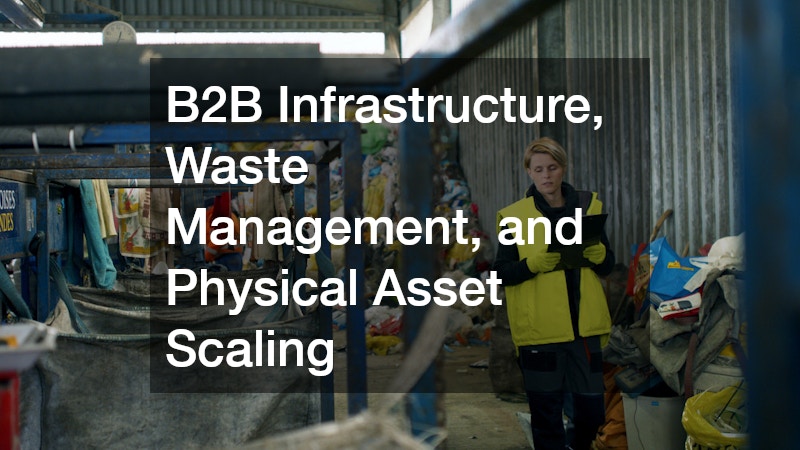
To scale an independent service business into a major enterprise, you must eventually move past simple residential jobs and learn how to secure lucrative B2B accounts, municipal subcontracts, and commercial infrastructure projects. Transitioning into large-scale commercial services requires a deep understanding of project estimation, heavy asset deployment, and complex municipal permitting laws.
If you choose to build a venture focused on commercial construction support or urban development logistics, your equipment strategy will dictate your ultimate scalability. Launching a high-volume dumpster rental business requires you to master local zoning laws, commercial waste disposal permits, and routing efficiency algorithms to ensure your physical containers are placed, pulled, and processed with maximum speed. This mastery of heavy civil logistics applies directly to structural development trades as well. To successfully scale a commercial paving business, an entrepreneur must know how to accurately calculate raw aggregate material costs, manage asphalt laying crews, and estimate massive multi-phase contracts without underbidding and destroying their operational cash reserves.
- Master the commercial bidding process: Learn how to read blueprints, interpret public municipal requests for proposals, and build precise line-item cost projections that cover labor, materials, and equipment overhead.
- Leverage commercial equipment financing: Utilize flexible lease-to-own arrangements for heavy equipment and rolling assets to keep your liquid capital free for payroll and material procurement.
- Enforce strict workplace safety standards: Implement rigorous, OSHA-compliant safety training frameworks to eliminate costly on-site accidents, preserve your equipment assets, and maintain low workers’ compensation insurance rates.
High-Value Collectible Arbitrage and Digital Authentication Systems

If your entrepreneurial goals lean toward retail, luxury goods, or alternative asset markets, your success will depend entirely on your ability to master commodity valuation, provenance tracking, and digital authentication systems. Alternative investment markets, ranging from fine art and vintage timepieces to high-end sports memorabilia, have grown into a massive global industry, offering incredible profit margins for founders who know how to identify undervalued assets and verify their historical authenticity.
Entering this high-margin market requires you to develop a highly trained eye and a deep connection with third-party verification networks. For instance, building an e-commerce platform centered around the buying and selling of a rare baseball autograph demands an advanced understanding of handwriting analysis, paper degradation metrics, and ink chemistry. Because the alternative asset market is highly vulnerable to sophisticated counterfeits, you must learn how to seamlessly integrate your inventory with global authentication leaders to verify the exact provenance of every item you list. By mastering these specialized authentication techniques and building a digital e-commerce storefront, you can turn a passionate hobby into a highly scalable alternative asset brokerage.
- Study historical auction sales data: Regularly analyze historical auction records and price indices to track changing consumer demands, spot rising market trends, and avoid overpaying for alternative assets.
- Build strong relationships with authenticators: Partner with top-tier authentication firms to streamline your grading workflows, guaranteeing that every piece of inventory features a verified, ironclad certification of authenticity.
- Design multi-channel digital storefronts: Launch your alternative asset brand across a mix of high-end private web stores, global auction platforms, and social commerce feeds to maximize your market reach and accelerate inventory turnover.
Gaining the skills necessary to be your own boss is a profound process of professional and personal transformation. True independence is not achieved by simply printing a business card or registering an LLC; it is forged through the systematic mastery of technical skills, operational logistics, regulatory compliance, and market strategy. Whether you choose to launch a venture in heavy industrial manufacturing, essential environmental services, highly regulated retail, or alternative asset markets, the underlying rules of successful entrepreneurship remain identical. You must replace the narrow mindset of an employee with the macro vision of a founder who views every operational hurdle as a solvable challenge.
As you prepare to step away from the security of traditional employment, remember that building a resilient enterprise is a marathon, not a sprint. Do not allow yourself to be paralyzed by the initial complexity of corporate governance, supply chain management, or regulatory oversight. Take the initiative today to begin auditing your skills, enrolling in advanced training programs, and drafting your operational blueprint. By taking absolute ownership of your professional development and building a solid operational foundation during your planning phase, you eliminate the anxieties of self-employment. With the right technical capabilities, a clear understanding of your market niche, and a commitment to operational excellence, you can confidently step into the market, build an unshakeable business, and unlock the unlimited financial and personal freedom of being your own boss.
